Safety Without Sacrificing Dignity: Designing Care That Respects Both
Most safety conversations between families and aging parents don't break down because of the risks.
They break down because of how the risks feel.
Safety without dignity feels like control. Dignity without safety feels like denial. Real care lives in the space between, and families often struggle to find that balance.
The Heart of the Issue
I hear this every week from adult children: "I'm just trying to keep my mom safe, but she feels like I'm taking over."
And I hear this from parents: "Let me be part of the decision. I don't want things done to me."
Both sides are trying. Both sides care deeply. And yet the conversation becomes harder the more urgent it feels.
Last week, our Director of Care and I were talking about a daughter who reached out because her mother needed support at home. The daughter had good intentions. She saw fall risks. She saw small memory slips. She wanted solutions quickly.
But what actually created movement in that conversation wasn't the checklist of safety concerns. It was recognizing something deeper:
Her mother needed to feel respected before she could feel supported.
So instead of jumping straight to "here's what needs to change," the approach shifted to:
"What matters to you most in your day?" "What helps you feel confident at home?" "Where would you like us to start together?"
And suddenly, there was trust.
The risks hadn't disappeared. But dignity was restored.
Where Families Get Stuck
Most families don't lack information. They lack a dignity-first framework for talking about safety.
Without it, safety tools can feel invasive. Support can feel like surveillance. And well-meaning daughters and sons end up feeling like the "bad guy" for trying to help.
A dignity-first approach changes that dynamic. It slows the conversation down. It invites the older adult into the planning process. It builds agreements instead of resistance.
When dignity leads, safety decisions become easier and more sustainable.
What Dignity-First Safety Actually Looks Like
Here are small shifts that make a big difference:
Replace "We need to fix this" with " Can we explore this together?"
Start with the older adult's routines instead of your own concerns.
Ask what support they want rather than introducing solutions immediately.
Clarify what will make them feel respected.
Bring them into the conversation early instead of after decisions are already made.
You build trust by building partnership.
Final Thought
Families often fear the wrong thing. They worry about injuries, but what older adults often fear most is losing their voice.
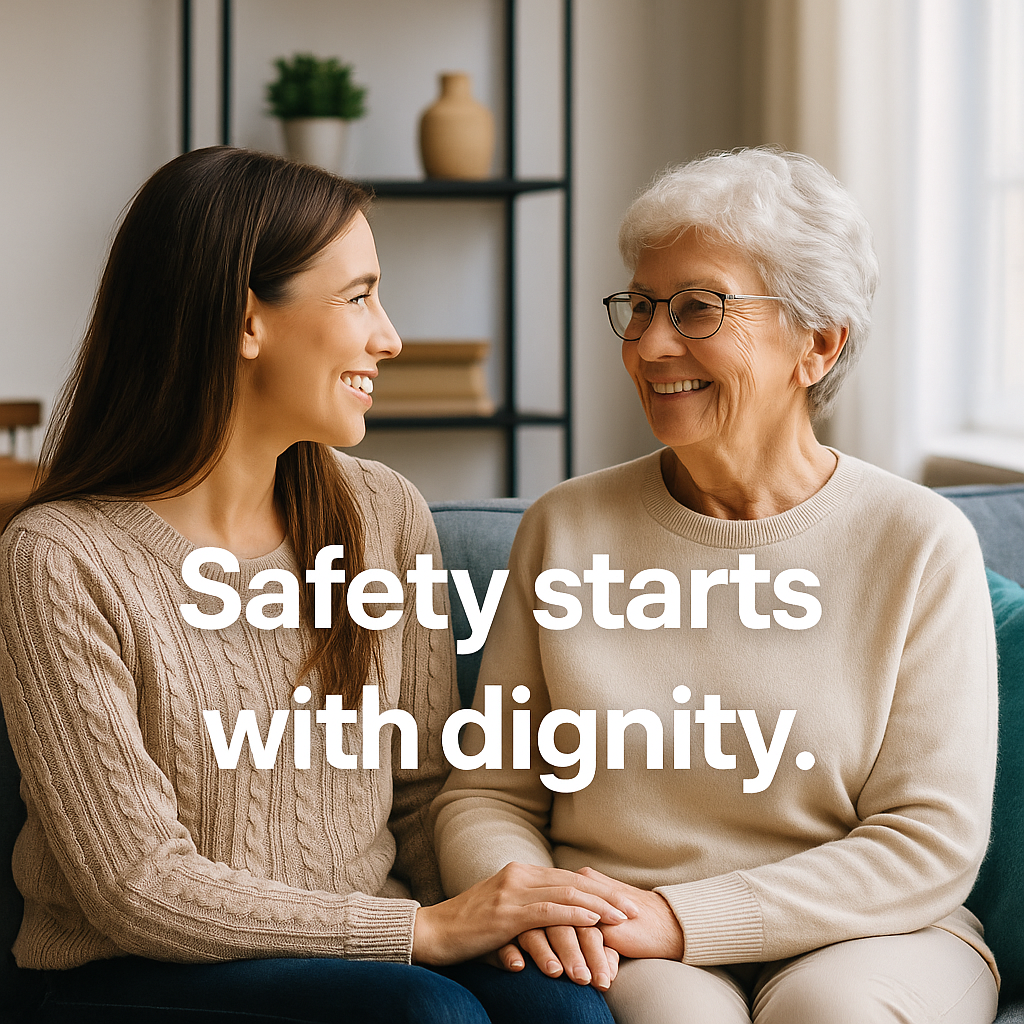
The safest homes are the ones where dignity leads every decision.
When you honour someone's autonomy, you don't just prevent harm. You strengthen the relationship that makes real support possible.
Thought-Provoking Question:
What would change in your family conversations if dignity was the starting point and not the afterthought?
Next Week’s Preview
Confidence, Not Competence: The Secret to Support That Sticks.
If you're thinking about how to support your family with care at home and want a conversation that prioritizes dignity, you can always reach out.
No pressure. Just clarity, when you need it.
By commenting, you agree to our Comment Moderation Policy.