The Invisible Load
Why Medication Management Drains Families More Than They Realize
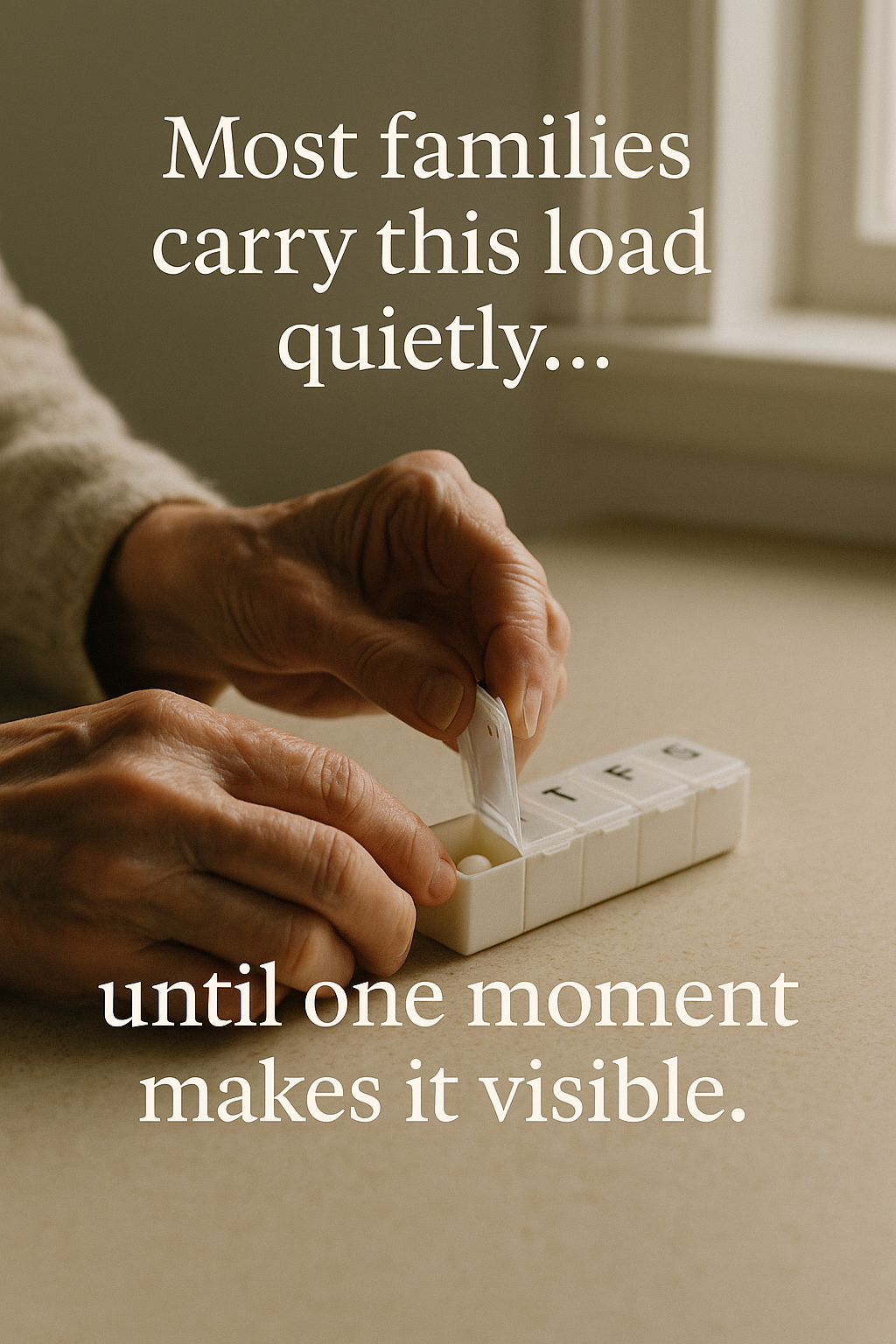
There is a quiet weight families carry every day, the weight of wondering whether a single pill was taken on time.
It does not look heavy from the outside. But inside a home, medication routines shape the rhythm of the day, the tone of conversations, and the tension families learn to hold without naming it.
Medication management centers on constant awareness.
Each dose depends on timing, food, symptoms, energy, and memory. Families monitor these details in the background while balancing work, caregiving, and their own wellbeing.
The invisible load grows because it is relentless. The responsibility does not pause. The uncertainty does not pause. The questions do not pause.
For many adult children, medication becomes the moment they feel most responsible for the safety of their parent. It is also the moment they question whether they are doing enough.
A daughter walks into her mother's kitchen and sees yesterday's pill organizer still half-full. She does not raise her voice. She simply reorganizes the box, sets a reminder, and carries the worry home with her.
A son receives a phone call at work: "Your dad says he took his medication twice this morning." He steps out of a meeting, not because the pill itself is dangerous, but because the uncertainty disrupts the ground beneath him.
A caregiver tries to follow a physician's instructions that sounded simple in the clinic but feel unclear at home. The dosage timing, the food pairings, the shifting symptoms, it all starts to blur.
These moments are small on their own. Together, they create an emotional and cognitive weight that families rarely acknowledge.
Building Steadiness: What Helps
Medication confidence grows when routines feel steady and predictable. Structure transforms mental load into shared clarity.
Here are grounding principles that help families feel supported:
Create one daily anchor moment. Tie medication to a consistent part of the day: breakfast, evening tea, or the nightly news. Predictability builds confidence.
Make the environment do the remembering. Keep medications in a visible, consistent spot. When the space supports the routine, families feel less pressure to carry the full weight.
Use shared understanding, not pressure. Talk about routines together. A shared plan removes the feeling that one person must hold everything alone.
Look for patterns, not perfection. Confidence grows when the family sees a stable rhythm, even if the day is not flawless.
Steadiness comes from clarity and collaboration, not more reminders.
Final Thought
Medication is a small object with a large emotional footprint. Families manage the routine and everything it represents: safety, stability, and the desire for their parent to continue thriving at home.
The invisible load becomes visible the moment we acknowledge it. That's when families begin to breathe again.
Thought-Provoking Question
What part of your loved one's daily routine carries the most invisible weight for you?
If this week's edition gave you clarity, consider sharing it with someone who may be carrying their own invisible load.
By commenting, you agree to our Comment Moderation Policy.