The Home Readiness Walkthrough
WHAT FAMILIES ARE NOTICING
There is often a moment, not always dramatic, when a family member looks around their parent's home and sees it differently. The same rooms that have been familiar for decades begin to register as something else: the bathroom with no grab bars, the area rug at the base of the stairs, the kitchen arranged the way it has been for forty years without any consideration of what has changed in the person living there. The house hasn't changed. The person has, gradually, and the house hasn't kept pace.
Most adult children notice things before they say anything. They file away observations, a cluttered hallway, a dim entryway, a stove left on more than it used to be, and carry them privately, waiting for the right moment, or for something to happen that would make the conversation easier to start. The waiting is usually longer than it needs to be.
Raising the subject of home safety with a parent requires more care than the physical changes themselves. A parent who has lived in the same house for thirty years experiences that home as an extension of themselves. To suggest it needs to be modified is, in many cases, to suggest that they do.
WHAT MAY ACTUALLY BE HAPPENING
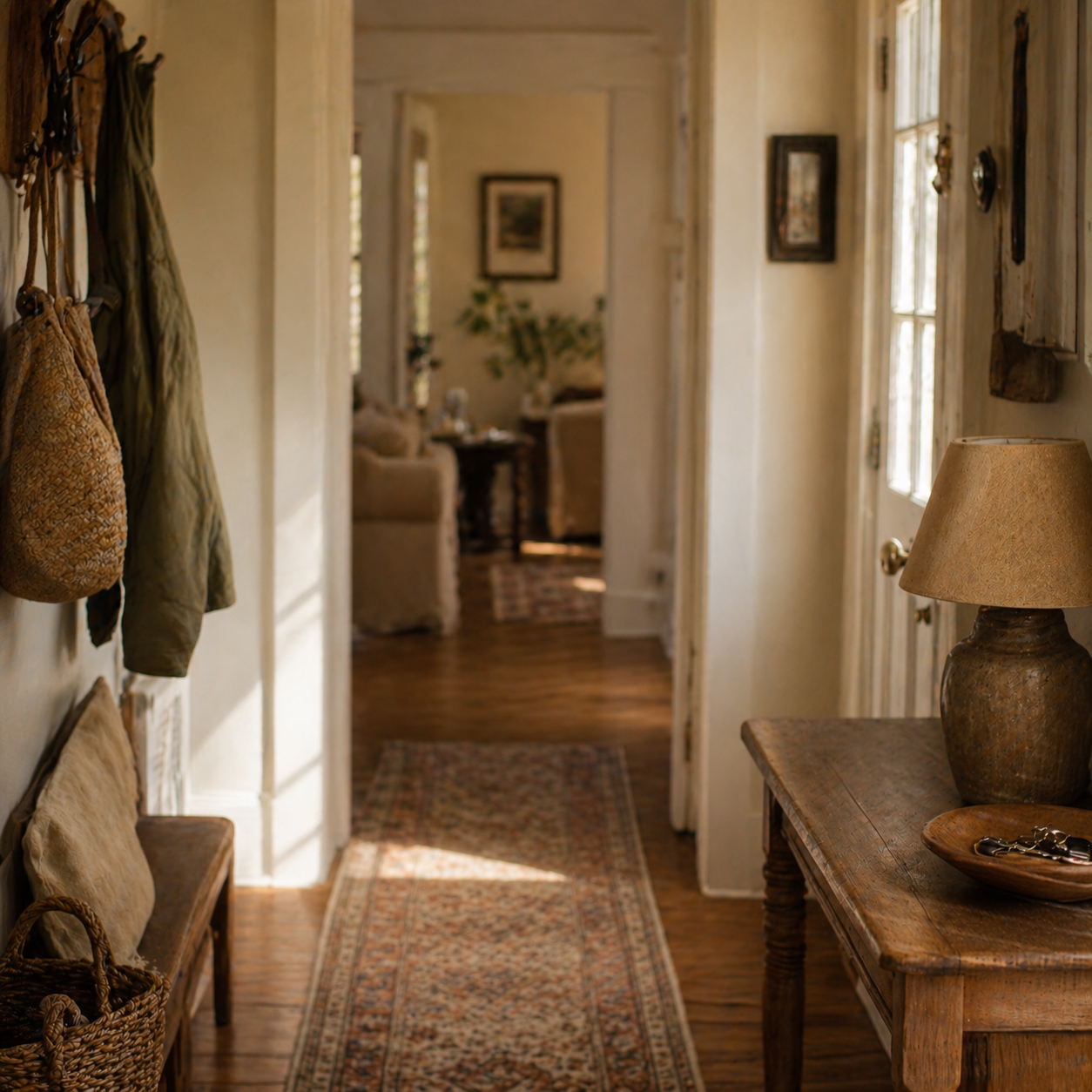
The physical home environment is one of the most significant and most under attended factors in how long an older adult can live independently with steadiness and confidence. Falls are the leading cause of injury-related death among adults over sixty-five, and the majority happen at home, in familiar rooms, during ordinary activities. Not because older adults are careless. Because the environment hasn't adapted to the changes in how they move, see, and balance.
What most families don't fully account for is the cumulative nature of these changes. A parent who has slowed slightly, whose vision has shifted, who steadies themselves on furniture they would once have walked past without thinking, that parent is navigating a home designed for a version of themselves that no longer quite exists. The adjustments needed are often modest. The reluctance to make them is often considerably larger.
There is also a dimension of identity in how people maintain their homes. A house kept a certain way — arranged, decorated, organized according to a person's own preferences and habits, is a material expression of who they are and how they have lived. Changing it, even practically, can feel like a concession. Families who understand this tend to approach the conversation differently than those who lead with a list of hazards.
WHAT THIS MEANS FOR FAMILIES RIGHT NOW
A home readiness walkthrough doesn't need to be a formal inspection or a project. It can begin as simply as walking through the home with fresh eyes not as an assessor, but as someone thinking about the next few years and wanting the space to support them. The framing matters: this is about making the home work better for your parent, not cataloguing what's wrong with it.
The areas that tend to matter most are also the most ordinary: bathrooms, where most falls happen; transitions between rooms and between inside and outside; lighting in areas used at night; the bedroom and the path to the bathroom; and the kitchen, particularly around the stove. These aren't the only places that matter, but they are where small changes tend to have the largest effect.
Many of the adjustments that make the greatest difference are also the least invasive: better lighting, a grab bar or two, a non-slip mat, removing a rug that catches a foot, moving frequently used items within easier reach. None of these require renovation. They require the conversation that makes them possible and that conversation tends to go better when it's framed around what the parent values most, which in almost every case is remaining in their own home, on their own terms.
Closing thought
A home that has been lived in for decades holds a person's history. The goal of a walkthrough isn't to change that. It's to make sure the house is ready to hold them through whatever comes next.
Families who do this well tend not to do it all at once. They notice, they mention, they suggest one thing at a time, and they give their parent room to think. The physical changes that result are often small. What they make possible, a longer stretch of independent living, less ambient anxiety — is considerably larger.
A question to sit with
If you walked through your parent's home today with no agenda other than to see it clearly, what is the one thing you would notice first?
By commenting, you agree to our Comment Moderation Policy.