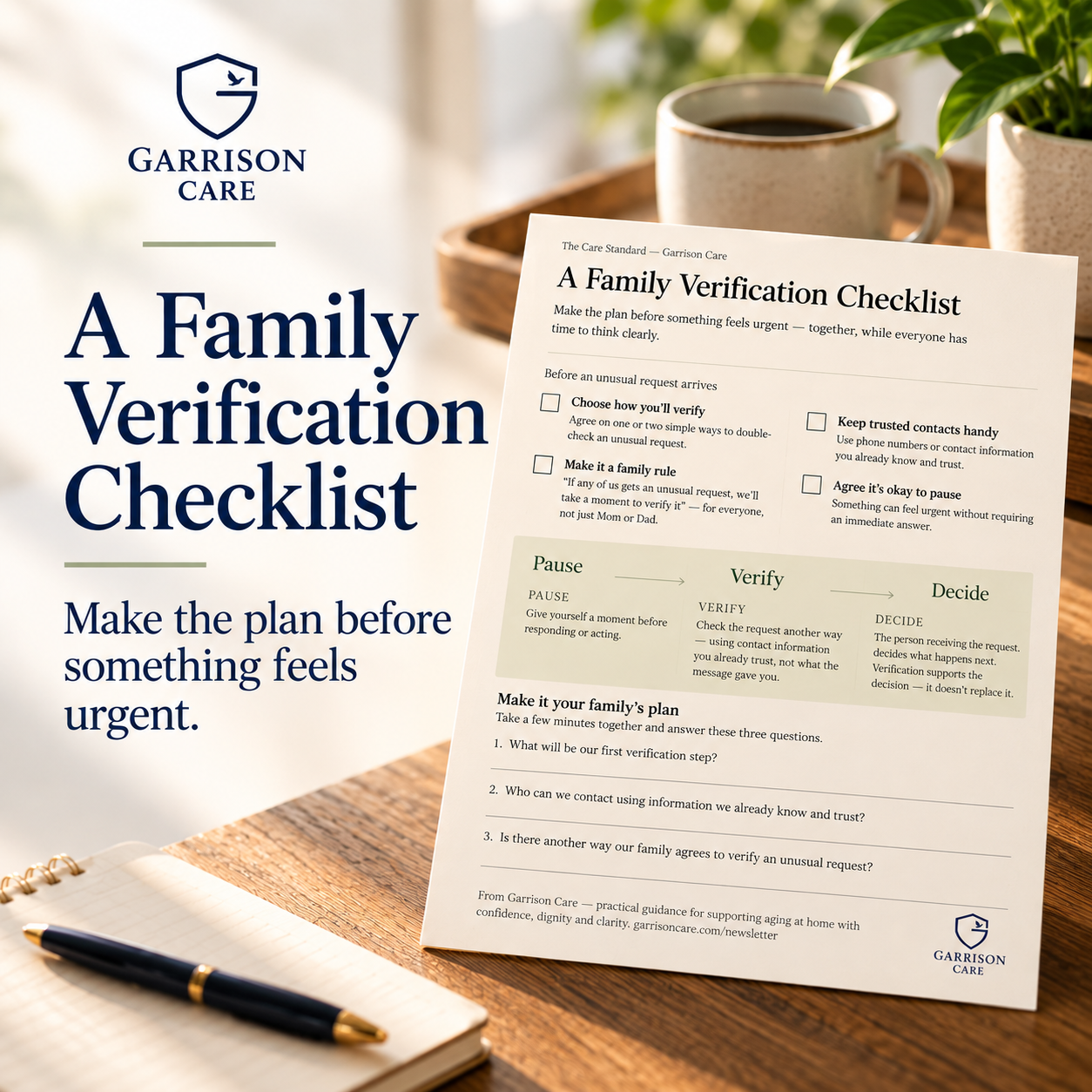
A Family Verification Checklist
A simple one-page checklist to help your family decide how you’ll pause, verify and respond to an unusual request — before the moment feels urgent.

When Dad Is Caring for Mom, And Everyone Assumes They're Fine
A family may gather around one parent's visible needs while the other quietly becomes responsible for appointments, medications, meals, transportation, and the emotional rhythm of the home. Because the caregiving spouse appears capable and rarely complains, the weight he is carrying can remain unseen.
This week's Care Standard explores the hidden strain that can develop when one aging spouse is caring for the other — and why understanding both parents' wellbeing leads to a more complete view of what the household needs.

What Home Care Actually Covers — And How to Know It's Right
Care had been arranged for about three weeks before one family realized they were not entirely sure what they had agreed to. The caregiver was kind. The visits were consistent. But when a family member asked what was actually supposed to happen during each visit, nobody could give a complete answer.
This week's Care Standard looks at what good home care actually includes — the specific details families are rarely told at the outset, and what it feels like when the arrangement is genuinely working.

The Rooms That Hide the Risk
A parent's home can feel familiar for years before certain risks become visible. The rug by the door, the dim hallway, the bathroom with nothing to hold onto — these are the kinds of details families often stop seeing because they have always been there.
This week's Care Standard looks at how ordinary rooms can quietly reveal where support may be needed. Not through alarm or blame, but through a calmer kind of attention: one room, one pattern, one small change at a time.

The Calm Control Week
There is a particular feeling that settles in after a few months of managing a parent's care alongside the rest of your life. The appointments are covered. Someone handles the medications. The weekend check-ins happen, more or less on schedule. And yet something still feels unsteady.
This week's Care Standard reflects on the invisible weight of keeping everything running, and why calm often comes from something simple: a shared picture, clear roles, and a caregiving arrangement that no longer lives in one person's head.

The Early Warning System
Small changes often register before anything feels serious. This week’s Care Standard reflects on how families notice subtle shifts over time — and why early awareness, held calmly, often protects care from becoming reactive later.

Caring From Afar
Caring from afar brings a unique kind of uncertainty. This edition of The Care Standard explores how distance affects confidence, why worry escalates without visibility, and how thoughtful structure helps families feel steady even when they cannot be present every day.

Caregiving Resolutions That Work
Many caregiving challenges come from carrying too much alone. This edition of The Care Standard explores why structure brings calm, how shared systems reduce strain, and what sustainable care looks like when responsibility no longer rests on one person.

When "I'm Fine" Isn't the Truth
Hidden decline often shows up quietly in patterns, pauses, and changes families feel before they can explain. This week’s Care Standard explores what noticing really means.