When Dad Is Caring for Mom, And Everyone Assumes They're Fine
What families are noticing
"We were so focused on Mom that we didn't see what it was doing to Dad."
A family gathers around one parent's needs — appointments, medication, mobility, cognition, and the other parent becomes, almost by default, the person who handles it. He drives her to her scans. He fills her pill organizer. He answers the phone when the pharmacy calls. And because he does it well, because he never complains, the family's attention settles somewhere else. Everyone assumes he's fine. He never told them otherwise.
The work that disappears into the day
Competence and strain can look exactly the same from the outside. A parent managing everything, from the schedule to the meals to the small emergencies, can be doing so while running on very little of his own. Sleep gets shorter. Meals get skipped or simplified. The things he used to do for himself quietly stop happening.
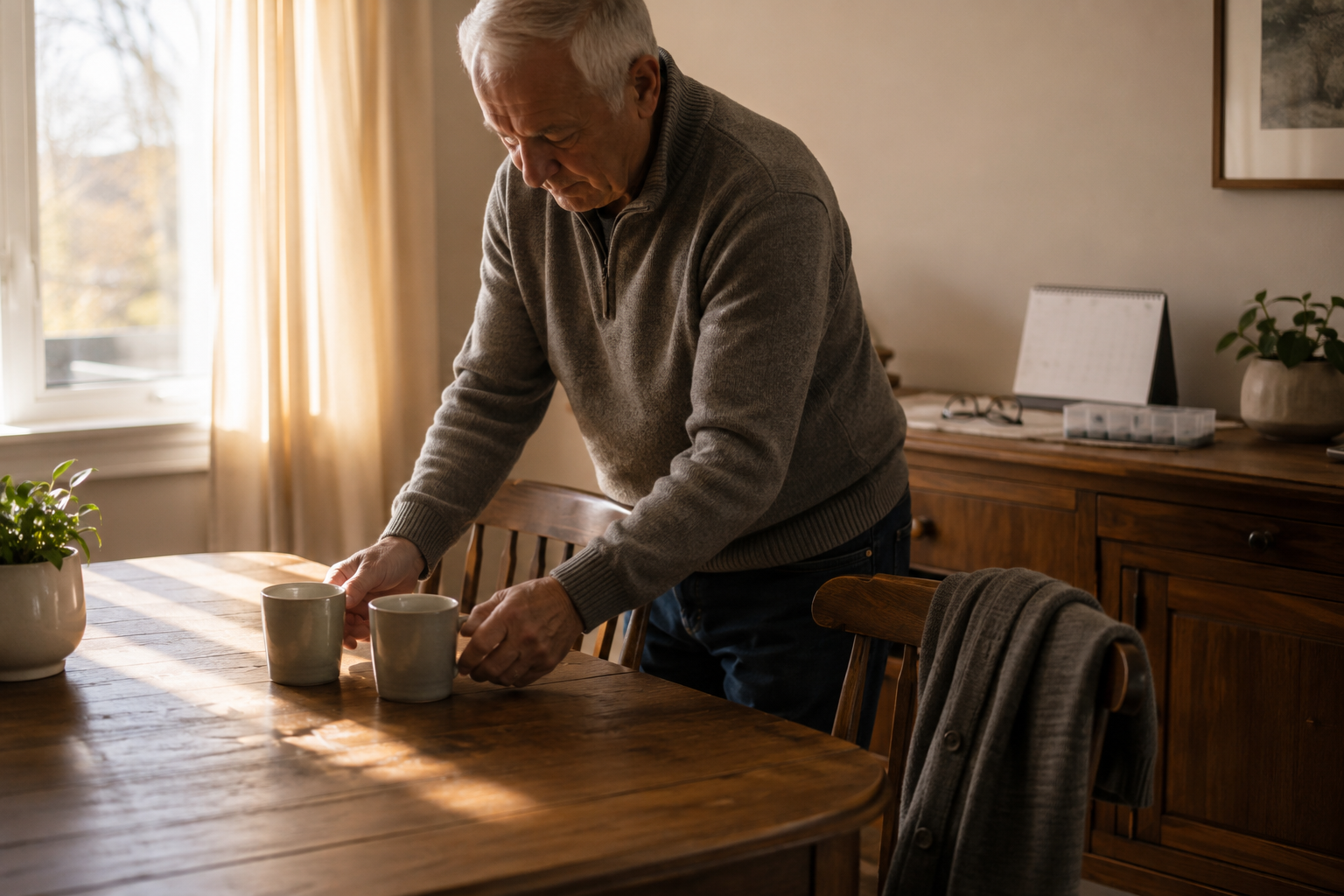
In real life, elderly spouse caregiver burnout in the GTA often appears as a slow narrowing. Fewer errands of his own. Less time with friends. A shorter fuse by evening, or a longer silence. It rarely looks urgent, which is part of why it's so often missed. There's no single moment that asks anyone to look closer.
What this means for families right now
Families often begin to see that both parents need support at home in Toronto, even when one parent's needs remain more visible. Alongside "Is Mom okay?" another question can widen the family's understanding: "How is Dad doing, actually?"
This often looks like noticing what's become harder for him lately, and where a small amount of outside help, even something occasional, could ease the parts he's been carrying alone. Some of the clearest signs of aging-couple caregiver strain are small: a missed errand, a skipped follow-up call, a comment about being tired that gets said once and then dropped.
An aging parent caring for a spouse at home is, in every sense, a caregiver himself. He may never use that word, though it describes the responsibility he carries each day.
A final thought
This is simply about widening the picture, so that the parent doing the caring is seen and supported too.
When you picture your parents' daily life, what might the caregiving spouse be carrying that the rest of the family rarely sees?