Early Signs of Memory Loss in Aging Parents: What Families Should Watch For
The early signs of memory loss in an aging parent that families notice are often small: a repeated question, a missed appointment, a familiar task that suddenly takes more effort. One moment rarely gives a full answer, yet a pattern over time can be worth understanding.
When to Be Concerned About a Parent's Memory

Memory changes can be part of aging, especially when someone is tired, stressed, grieving, unwell, or adjusting to medication changes. The more useful question is whether there has been a change from the person's usual way of managing daily life.
Families may choose to pay closer attention when they notice:
The same question or story repeated frequently
Appointments, bills, or medications becoming harder to manage
Familiar routines becoming confusing
Difficulty following conversations or finding common words
Unusual hesitation with routes, tasks, or decisions that once felt familiar
Changes that continue over weeks or months
Concerns shared by more than one person who knows them well
A pattern does not provide a diagnosis. It gives a family something clearer to observe and, when appropriate, discuss with a health-care provider.
Dementia vs. Normal Aging Signs in Ontario
The difference between typical age-related changes and changes that deserve a closer look often comes down to frequency, impact, and change from a person's own baseline.
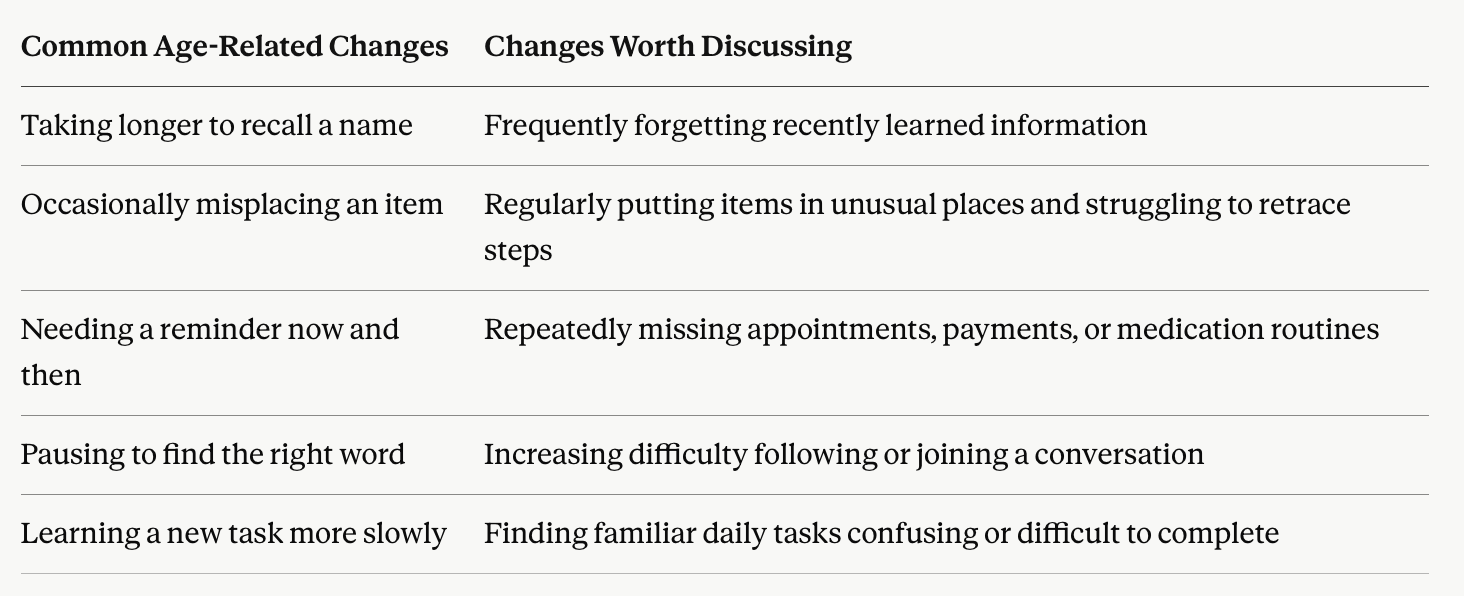
No table can tell the whole story. People have different routines, personalities, health histories, and levels of independence. What matters most is a meaningful change in what feels familiar for that individual.
Early Signs of Memory Loss in Aging Parents: What to Track
Families often notice the emotional weight of a change before they can explain it clearly. A quiet record can bring some clarity over time. Consider noting:
The date and what happened
Whether the situation has happened before
What may have been affecting the day — poor sleep, illness, stress, or a medication change
How the person responded
What remained familiar, steady, and independent
This is not about building a case. It is a way to see the fuller picture with care and respect.
When to Consider Speaking With a Health-Care Provider
A conversation with a primary-care provider can be useful when memory changes are becoming more frequent, affecting daily life, or leaving the family unsure how to respond.
Consider raising the concern when:
A repeated pattern is becoming clear
Daily tasks such as finances, medications, meals, or transportation are becoming harder to manage
The person seems less able to follow familiar routines
Mood, judgment, language, or social engagement have changed alongside memory concerns
Family members have noticed similar changes
You need help understanding what support or assessment may be appropriate
A sudden or dramatic change in confusion, awareness, speech, mobility, or behaviour deserves prompt medical attention. Sudden changes can have many causes, and a health-care provider can help guide the next step.
How to Talk About Memory Concerns With a Parent
Conversations about memory can feel tender because they touch independence, identity, and dignity. The goal is not to prove a point. It is to stay connected while making room for what may need attention.
What works
Choose a calm, private moment
Start with care rather than concern — "I've been thinking about you" lands differently than "I've noticed some things"
Speak from your own observation: "I noticed…" or "I've been wondering…"
Focus on one recent example rather than a long list
Ask how they have been feeling
Leave room for their perspective
Offer to attend a medical appointment or help keep notes, if welcomed
What doesn't help
Raising the topic during a stressful moment
Correcting every repeated detail
Using labels before a health-care conversation has happened
Involving multiple family members at once without prior agreement
Raising it in front of others, which adds shame to an already tender subject
Speaking about the person as though they are not present
Sometimes the first conversation simply opens a door. That can be enough.
Memory Concerns for an Aging Parent in Ontario: Where to Start
Families looking for support around memory concerns often begin with their parent's family physician or a local health-care provider, who can advise on appropriate next steps. A provider can review health history, medications, sleep, mood, recent illness, and other factors that may affect memory.
It can also help to bring a short, respectful record of what has changed and when. Clear observations give the conversation a starting point while keeping the focus on the person, not only the concern.
Frequently Asked Questions
What are the first signs of memory loss in an aging parent?
Early signs may include frequently repeating questions, forgetting recent conversations, missing appointments, struggling with familiar tasks, or becoming more confused by usual routines. Patterns and changes over time are generally more meaningful than one isolated incident.
What is normal age-related memory loss?
Normal aging can include slower recall, occasionally forgetting a name, or taking longer to learn something new. Changes that affect daily functioning, repeat frequently, or feel meaningfully different from the person's usual abilities are worth discussing with a health-care provider.
When should I be concerned about my parent's memory?
Consider speaking with a health-care provider when memory changes are persistent, becoming more frequent, affecting safety or everyday tasks, or being noticed by several people close to your parent.
How can I raise memory concerns without upsetting my parent?
Choose a calm moment and begin with care rather than conclusions. Share one observation, ask how they are feeling, and make space for their perspective. A respectful conversation can begin with: "I've noticed this has been happening more often, and I wanted to check in with you."
Related Reading
When It's Still Small — Memory Concerns Families Don't Say Out Loud
garrisoncare.com/newsletter/when-its-still-small
The newsletter covers the emotional side of this moment — what families are holding before they feel ready to name it, and why quiet attention is often the right first response.