What to Set Up at Home After a Parent's Hospital Discharge in Ontario

Hospital discharge often happens faster than families expect. One day a parent is in a hospital bed; the next, the family is trying to figure out what needs to be in place before they come home. Most families are working this out for the first time, under pressure, with incomplete information, and the discharge paperwork rarely explains what the next 72 hours will actually require.
The goal is not to make the home perfect before your parent arrives. The goal is to make the first few days safer, clearer, and less heavy.
What to Set Up at Home After Hospital Discharge in Ontario
The first step is to think about the home through your parent's current abilities, not their usual routine.
A parent may be coming home with less strength, new medications, a walker, pain, fatigue, confusion, follow-up appointments, or instructions the family is still trying to understand. The home may look familiar, but the way your parent moves through it may have changed.
Start with the areas your parent will use most in the first few days:
Where they will enter the home
Where they will sleep
How they will get to the bathroom
Where meals and drinks will be kept
Where medications and discharge papers will be placed
How they will reach a phone or emergency contact
Who will be present or checking in
This is the first layer of discharge coordination. It helps the family see what needs attention before the parent arrives, and what can be adjusted later.
What Should Be Ready Before a Parent Comes Home From Hospital?
Before your parent comes home, focus on the first night and the next morning. Those two windows often show whether the home setup and support plan are steady enough.
Home setup checklist after hospital discharge
Before discharge day, try to prepare:
Clear walking paths from the entrance to the bedroom, bathroom, and kitchen
A safe place to sleep that does not require unnecessary stairs
Good lighting in hallways, bathrooms, and beside the bed
Commonly used items placed within easy reach
A chair with arms, if standing is difficult
Non-slip footwear or socks
Easy meals, snacks, and drinks
A visible medication area
Discharge papers in one place
Emergency contacts written clearly
A phone or call bell within reach
Any mobility aids, bathroom aids, or equipment recommended by the care team
The setup does not need to solve every future need. It needs to support the next few days.
What Does the First 72 Hours After Discharge Usually Require?
The first 72 hours after hospital discharge are often where families see the real care picture.
This period may include:
Watching how your parent moves through the home
Helping with meals, hydration, and personal care
Confirming medication changes
Picking up prescriptions
Booking or confirming follow-up appointments
Understanding wound care, exercises, or activity restrictions
Watching for pain, dizziness, confusion, weakness, or unusual symptoms
Coordinating updates between siblings or family members
Deciding whether short-term home care is needed
This is also when many families realize that the discharge plan is not only medical. It is practical, emotional, and relational.
A senior hospital discharge plan GTA families can actually use should answer simple questions: who is doing what, when support is needed, what the parent can safely manage, and who the family should contact when something is unclear.
Home Care After Discharge in Toronto: What Kind of Support May Be Needed?
For families considering home care after discharge in Toronto, the first question is usually not just how many hours of care are needed. It is what kind of help would make home feel steadier.
Support may include:
Personal care, such as bathing, dressing, and grooming
Meal preparation and hydration reminders
Medication reminders
Mobility support around the home
Companionship and reassurance
Overnight support
Transportation to follow-up appointments
Light housekeeping related to recovery
Family updates and care coordination
Some families need support for a few days. Others may need a longer care plan while they understand what recovery will look like. The right level of support depends on your parent's condition, the home environment, family availability, and what the hospital team has recommended.
Normal vs. Worth Addressing After a Parent Comes Home
Some changes are expected after a hospital stay. Others should be taken seriously and followed up promptly.
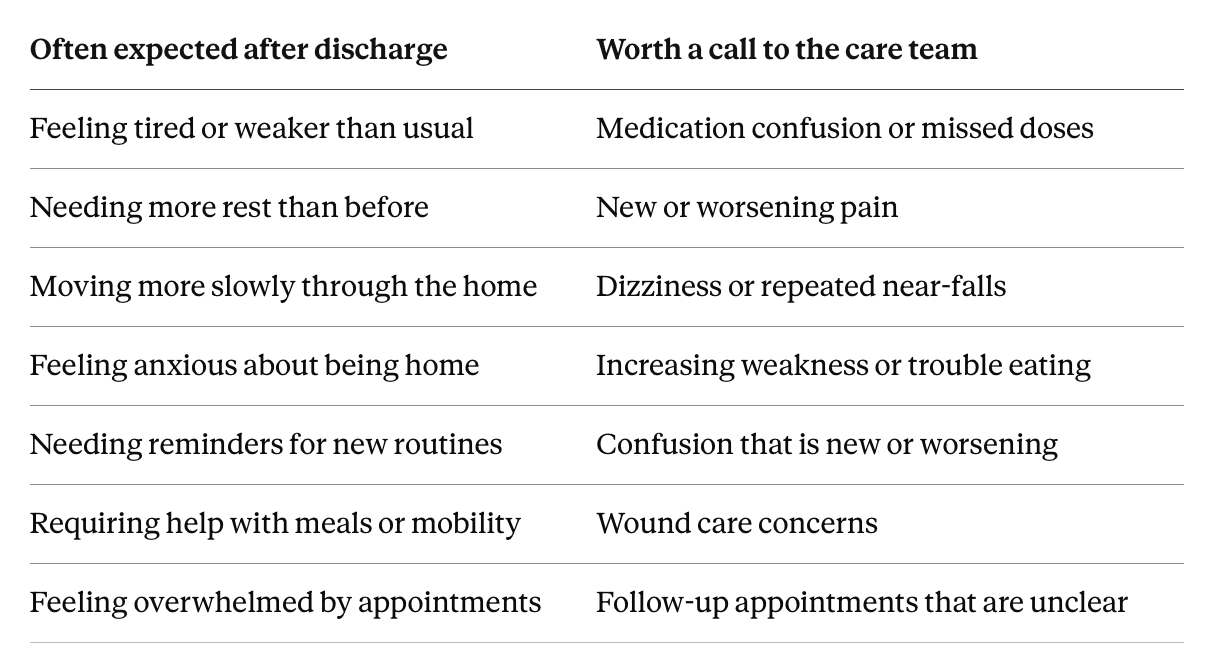
Needs urgent attention — call emergency services if your parent experiences: sudden trouble breathing, chest pain, signs of stroke, a serious fall, loss of consciousness, or any symptom that feels sudden, severe, or unsafe.
Families do not need to diagnose what is happening. They need to know when to ask for help.
Who Should Families Call After Hospital Discharge in Ontario?
After discharge, families may need to contact more than one person or service. Keeping these contacts in one place can make the first few days easier.
Key contacts to keep nearby:
The hospital discharge planner or social worker
The unit or clinic contact listed on the discharge papers
Your parent's family doctor or nurse practitioner
The pharmacy
Ontario Health atHome (publicly funded home and community care)
Any specialist listed in the discharge instructions
A private home care provider, if additional support is needed
Emergency services for urgent symptoms or immediate safety concerns
Ontario Health atHome can help eligible patients access publicly funded home and community care services after discharge. Families can also explore private care when they need additional support, faster coverage, companionship, overnight help, or coordination beyond what the funded system provides.
Note: Confirm Ontario Health atHome contact details at ontariohealthathome.ca before publishing, as service numbers may be updated.
When to Consider Post-Hospital Support for an Aging Parent in Ontario
Post-hospital support for aging parents in Ontario often includes both practical care and coordination. Consider additional support when:
Your parent cannot safely be alone for extended periods
Bathing, dressing, or toileting is difficult without assistance
There is a higher risk of falls
Medication instructions are confusing or the schedule is complex
Family members are unsure who is responsible for what
Work schedules make consistent check-ins difficult
Your parent is anxious, lonely, or unsettled at home
The first night or first morning feels uncertain
Siblings are coordinating from different locations
Care needs are changing quickly
Support does not have to mean a permanent arrangement. Sometimes the most helpful step is short-term support while the family understands what recovery will require.
How to Talk About Discharge Support With a Parent
Many parents want to come home and return to normal as quickly as possible. That is understandable. It can also make conversations about support feel sensitive. The tone matters.
What tends to work:
"Let's make the first few days easier while you settle back in."
"This does not have to be forever. Let's start with what helps this week."
"We want you to feel steady at home."
"Can we put a little support in place while we see how the first few days go?"
"Let's make sure the basics are covered before everyone goes back to their regular schedule."
Involving the parent in decisions about setup and support wherever possible — even small choices restore a sense of control.
What tends not to work:
"You cannot manage this alone."
"We already decided what you need."
"You are not safe by yourself."
Presenting the full care plan before the parent has had a chance to settle in
Making changes to the home without explaining what you are doing and why
Framing the conversation around what the parent can no longer do rather than what will make the next few days easier
Most parents returning from hospital are tired, possibly anxious, and aware that something has changed — even if they are not ready to say so. The most useful conversations in the first few days are brief, practical, and led by the parent's experience rather than the family's agenda.
How Care Coordination Can Help After Discharge
Hospital discharge can leave families managing many separate pieces at once: paperwork, prescriptions, appointments, transportation, home setup, sibling communication, and questions about what comes next.
Care coordination helps bring those pieces into a clearer order.
A care coordination partner can help families think through:
What needs to be ready before the parent arrives home
What support is needed in the first 24 to 72 hours
Which family member is responsible for each task
What care can be handled by family and where professional support helps
What to watch for as needs change
How to keep communication steady between everyone involved
The goal is not to take over the family's role. It is to make the role less scattered, less confusing, and less heavy.
If your family is navigating discharge right now and the moving pieces feel like too much to sort alone, a Care Advisor at Garrison Care can help you think through what matters first.
Book a care coordination conversation with Garrison Care →
Frequently Asked Questions
What should I ask before my parent is discharged from hospital?
Ask the care team: What has changed since admission? What help will my parent need at home? Are there medication changes, movement restrictions, or wound care instructions? What symptoms should we watch for, and who do we call if something is unclear? What follow-up appointments are needed, and has a home care referral been made? Ask for written instructions and keep them in one place before leaving the hospital.
How do I prepare the house after a parent leaves hospital?
Start with the areas your parent will use first: the entrance, bedroom, bathroom, kitchen, and sitting area. Clear pathways, improve lighting, place essentials within reach, prepare simple meals, organize medications, and keep emergency contacts visible. Think about how your parent will move through the home when tired, weak, or using mobility equipment — and set up for that version of their day, not their usual one.
Can I get home care after hospital discharge in Ontario?
Yes. Some patients may be eligible for publicly funded home and community care through Ontario Health atHome. Families can request a referral through the hospital's discharge planner or social worker before the parent leaves. For faster or more flexible support, private home care agencies in the GTA can typically arrange care within 24 to 48 hours. A care coordinator or care advisor can help families understand which option fits their situation and timeline.
How long should someone stay with an elderly parent after discharge?
There is no single answer. Some parents may need only a check-in. Others may need someone present for the first night, the first few days, or longer. Consider staying or arranging consistent support if your parent has new weakness, confusion, fall risk, medication changes, mobility challenges, pain, or anxiety about being alone. The first 72 hours often clarify what level of support is realistic going forward.
Related Reading
This week's Care Standard explores the disorientation families feel when discharge arrives before they feel ready — and what the first 72 hours actually require.
Read: After the Hospital: The Week Nobody Plans For — The Care Standard, Week 53 →
Garrison Care supports families across the Greater Toronto Area as they navigate the early and middle stages of caring for an aging parent. For families unsure where to begin, a Care Advisor can help clarify the next thoughtful step.