Aging Parent Caring for a Spouse at Home: Warning Signs Families Miss
When an aging parent is caring for a spouse at home, the household can look stable from the outside while one person carries far more than anyone realizes. The signs that this arrangement is becoming difficult are often small: a missed detail, a change in mood, a routine that no longer runs as smoothly as it once did.
What happens when one elderly spouse cares for the other?
Spousal caregiving often develops slowly. A husband begins driving his wife to appointments. A wife starts organizing her husband's medications. One spouse gradually takes on more cooking, household tasks, personal care, or communication with healthcare providers.
Because this work is woven into the relationship itself, it rarely looks like caregiving from the outside. It looks like a marriage.
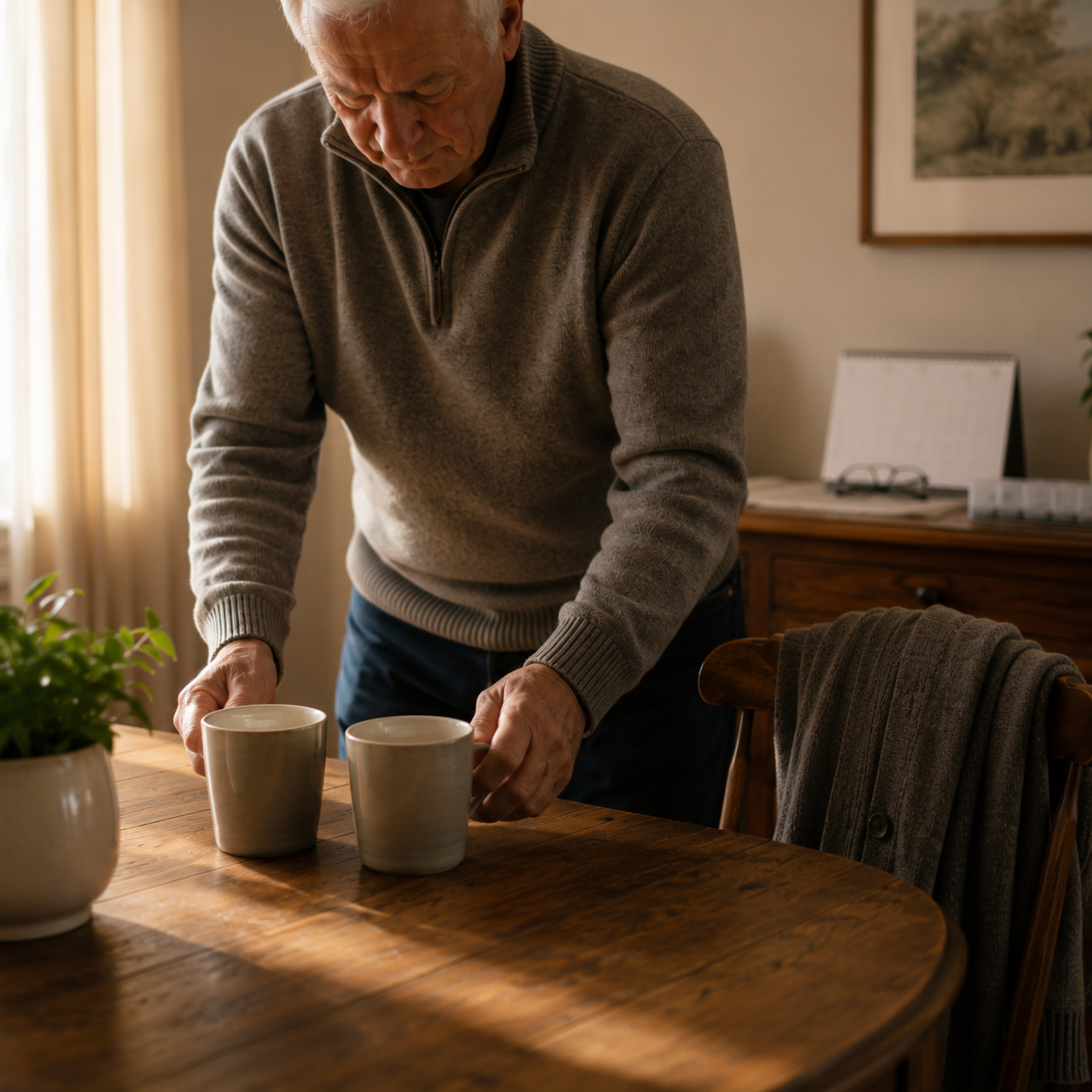
Over time, that person may become responsible for meals and appetite, medications and prescriptions, appointments, transportation, mobility support, household decisions, and keeping the rest of the family informed. The caregiving spouse may never describe themselves as a caregiver, even as much of the household comes to depend on their health, memory, and availability.
Why is caregiver strain in aging couples easy to miss?
Competence and strain can look remarkably similar from outside the home. The caregiving spouse may continue answering the phone, preparing meals, attending appointments, and reassuring the family that everything is fine. Their commitment can make the household appear more stable than it feels.
Families also tend to direct their attention toward the parent with the clearer physical need. The spouse providing care becomes the reliable one who reports what's happening and handles the next task. This creates a blind spot: the family knows how the parent receiving care is doing, while knowing much less about the person providing it.
The strain often appears as a gradual narrowing: fewer visits with friends, less time outside the home, shorter or disrupted sleep, simpler or skipped meals, delayed personal appointments, less patience by the end of the day.
Common adjustments vs. signs worth looking at more closely
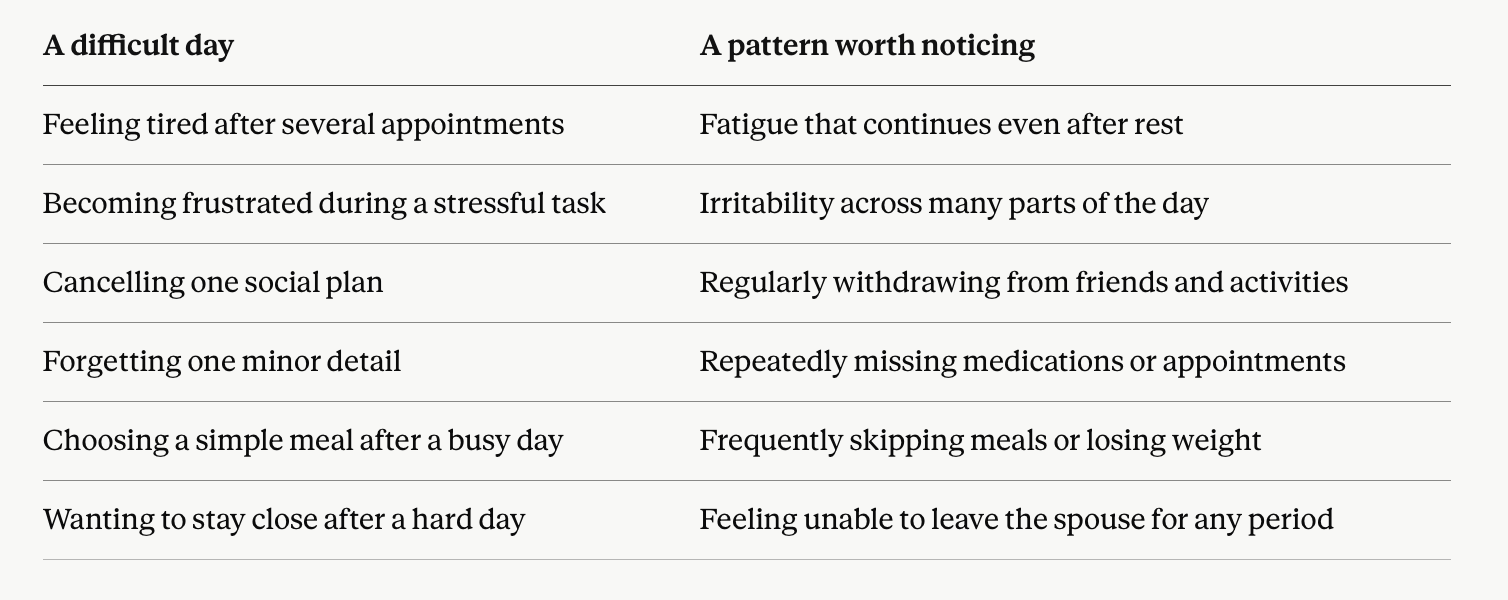
No single item on this list tells the whole story. A pattern across several usually offers a clearer picture of how much one person is carrying.
When to consider looking closer
The caregiving spouse is missing their own appointments
Medication or meal routines are becoming inconsistent
Mobility assistance is becoming physically difficult for them
One spouse cannot safely be left alone
The caregiver is increasingly isolated from friends or activities
Adult children are getting more frequent calls about small emergencies
How to talk to a parent who is caring for their spouse
Many older spouses take pride in caring for the person with whom they've built a life. A conversation centred on everything they can no longer manage may feel like criticism or a threat to their independence. A steadier approach begins with curiosity and respect.
What tends to work:
Naming the work you already see them doing
Asking which parts of the day have become more tiring
Focusing on specific routines rather than broad judgments
Recognizing their knowledge of their spouse
Framing support as something that strengthens the household
Helpful openings: "You've been carrying a lot of the appointments lately — how has that been feeling for you?" or "What's become harder to keep up with?"
What tends not to work:
"You can't keep doing this."
"You're clearly overwhelmed."
Listing every mistake or missed task
Raising the subject during an argument or stressful moment
Asking only whether they need help
A direct question like "Do you need help?" often gets a quick "no." A question about what has become harder tends to lead somewhere more useful.
When both parents need support at home
Families searching for answers around elderly spouse caregiver burnout in the GTA are often responding to something that's been building for months, sometimes years. The fuller question is whether both parents have enough support at home in Toronto to preserve their routines, energy, and sense of control, not only whether one parent's visible needs are being met.
A plan built around the household, rather than around a single diagnosis or need, considers who is carrying the physical work, who is managing the mental load of appointments and details, and where a small amount of outside support could ease pressure without taking over.
Ontario Health atHome is the publicly funded starting point for home and community care assessments in Ontario, and can help determine eligibility for services like personal support, nursing, or respite care.
Frequently asked questions
What are the first signs of caregiver burnout in an elderly spouse?
Early signs can include persistent tiredness, changes in sleep or appetite, irritability, reduced social contact, and neglect of personal appointments. Families may also notice small household routines beginning to slip.
Can an elderly person safely care for their spouse at home?
Many older adults provide capable, meaningful care for a spouse. Whether the arrangement remains appropriate depends on both partners' health, mobility, cognition, and access to backup support. The caregiving spouse's wellbeing matters alongside the needs of the person receiving care.
Why do older spouse caregivers refuse help?
They often see caregiving as part of the marriage rather than a separate role, and may value privacy, independence, and the ability to make decisions together. Support is usually easier to discuss when it's framed around preserving those priorities rather than taking over.
What kind of home support can help an older couple?
Depending on the couple's needs, support may include personal care, meal preparation, transportation, medication reminders, companionship, or respite care. Ontario Health atHome also provides publicly funded pathways for eligible residents.
Related reading — The Care Standard, [When Dad Is Caring for Mom — And Everyone Assumes They're Fine]
If any of this feels familiar, a conversation with a Garrison Care Advisor can help you think through what kind of support might fit your family.